




Host & Guest Introduction
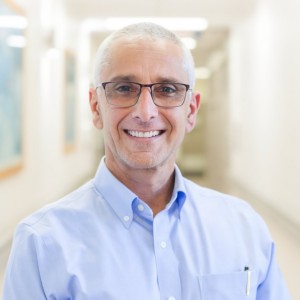
Tony Pisanelli, host of the Career Advantage Show, welcomes Dr. Warwick Bishop, a Tasmanian cardiologist, author, and podcast host. The episode explores how Warwick channeled professional frustration into entrepreneurial action, expanding his impact beyond clinical practice through books, podcasting, and wellness businesses — all driven by a mission to help people live as well as possible for as long as possible.
Key Takeaways:
- Pioneers face resistance: Warwick was the first cardiologist in Tasmania trained in cardiac CT imaging and faced significant pushback from colleagues when advocating for the technology, illustrating that innovation often meets institutional inertia.
- Patient empowerment drives change: Frustrated by slow adoption among peers, Warwick wrote his first book Have You Planned Your Heart Attack? to give patients the knowledge needed to have better conversations with their doctors.
- Cardiac CT imaging outperforms treadmill tests for predicting future heart attack risk, as it detects arterial buildup rather than just identifying existing narrowings.
- Knowing your "why" is transformative: Working with a coach and applying Simon Sinek's framework helped Warwick clarify his core purpose, reshaping his entire professional direction in his 50s.
- Relationships are the foundation of longevity: The Harvard Longevity Study found that healthy relationships — including at work — are the single strongest predictor of a long, healthy life.
- Toxic work environments directly harm heart health: Stress, anxiety, and poor workplace relationships have measurable negative effects on cardiovascular health.
- Awareness alone isn't enough: Many people understand the importance of preventative heart health but still fail to act, highlighting the gap between knowledge and behavior change.
- Personal growth compounds over time: Warwick credits meditation, stress management, gratitude, and deeper relationships — practices he wishes he'd embraced earlier — as key to his current well-being.
- Slow down to go further: Warwick's advice to his younger self was to be less singularly ambitious and invest more in balance, relationships, and personal development.
Welcome to The Career Advantage Show
I am your host, Tony Pisanelli
On this show, we dive deep with our guests to uncover real stories, practical insights, and proven strategies that will help you reclaim your career power, navigate transitions, and design what’s next with confidence.
My very special guest today is Warrick Bishop ...
Warrick Bishop is a cardiologist with special interest in cardiovascular disease prevention incorporating imaging, lipids and lifestyle.
He is author of "Have You Planned Your Heart Attack?" with over 20,000 copies in print; the book is a discussion for patients and doctors about how we can be most precise about cardiovascular risk and save lives! He has recently released "Atrial Fibrillation Explained", a resource relating to a common cardiac condition affecting over 1% of the entire population.
Graduating from the University of Tasmania, School of Medicine, in 1988. He worked in the Northern Territory and South Australia before completing his advanced training in cardiology in Hobart, Tasmania, becoming a Fellow of the Royal Australian College of Physicians and Member of the Cardiac Society of Australia and New Zealand in 1997.
Working predominately in private practice. In 2009 Warrick undertook training in CT Cardiac Coronary Angiography, being the first cardiologist in Tasmania with this specialist recognition. This area of imaging drives his interest in preventative cardiology. He holds level B certification with the Australian Joint Committee for CCTA and is a member of the Society of Cardiac Computed Tomography.
Warrick is also a member of the Australian Atherosclerosis Society and regularly contributes to education, guidelines and industry in this area. He has also developed a particular interest in diabetic-related risk of coronary artery disease, specifically related to eating guidelines and lipid profiles.
Warrick has acted as an accredited examiner for the Royal Australian College of Physicians and is regularly involved with teaching medical students and junior doctors. He has worked with Hobart's Menzies Institute for Medical Research on projects in an affiliate capacity and is recognised by the Medical School of the University of Tasmania with academic status.
For more than a year, Warrick has been a member of the Clinical Issues Committee of the Australian Heart Foundation, providing input into issues of significance for the management of heart patients. Warrick has been a member of the HFA expert writing group to produce a position on coronary imaging with CT and also a member of the CSANZ/AAS writing group to produce the Australian/ New Zealand lipid guidelines.
In his free time, Warrick enjoys travel and music, he surfs and plays guitar with his children.
Transcript
[00:00.980 --> 00:11.960] Welcome to the Career Advantage Show, where we help you reclaim your career power and design your working life on your terms.
[00:12.540 --> 00:18.640] I'm Tony Piscinelli, and each week I sit down with leaders who have faced career-defining moments,
[00:19.300 --> 00:26.080] such as a devastating job loss, burnout, stagnation, or even workplace harassment,
[00:26.080 --> 00:33.100] and being able to turn these difficult circumstances into powerful and graver opportunities.
[00:33.660 --> 00:40.100] Welcome to today's Career Advantage Show, where I'm joined by my very special guest, Warwick Bishop,
[00:40.500 --> 00:46.900] who is a cardiologist, an author, and a podcast host. Welcome, Warwick.
[00:47.580 --> 00:48.880] Thanks for having me, Tony.
[00:49.920 --> 00:55.760] Now, Warwick, as I've just briefly mentioned, that is a very interesting set of capability sets.
[00:56.080 --> 01:04.920] How does a cardiologist who specializes in a particular field, and without doubt is an extremely busy person,
[01:05.480 --> 01:09.920] find time to also write books and host a podcast?
[01:10.240 --> 01:12.060] How did that journey all come about?
[01:13.920 --> 01:16.340] Well, thank you for asking, Tony.
[01:16.340 --> 01:27.360] Basically, a decade ago, I had the opportunity as a cardiologist to look at some emerging technology,
[01:27.520 --> 01:34.520] and the technology that I went to go and find more information about was a technology
[01:34.520 --> 01:42.500] which we could loosely call cardiac CT imaging or coronary artery calcium scoring.
[01:42.500 --> 01:50.320] And a decade ago, I was the first cardiologist in Tasmania, which is where I'm based, to have done that training.
[01:51.160 --> 01:59.340] And I was really taken by the value that this information, this new technology could give us.
[01:59.340 --> 02:10.120] And in a nutshell, Tony, to be fair to say that if we could take an individual before they've had a heart attack
[02:10.120 --> 02:14.680] and look at their heart, we could, by using cardiac CT imaging,
[02:14.820 --> 02:21.120] identify those people who are at unacceptably high risk in the future and implement therapy,
[02:21.120 --> 02:29.100] which could, I believe, be life-changing, but we could also identify people who are at low risk or risk somewhere in between.
[02:29.280 --> 02:33.260] So it was really a crystal ball into someone's future heart risk.
[02:33.340 --> 02:35.180] Well, I got super excited about that.
[02:35.240 --> 02:41.840] I saw this as a holy grail, and to a large degree, as I started to share this with my colleagues,
[02:41.840 --> 02:48.720] the old story of the pioneer gets the arrows, the settlers get the pastures,
[02:49.340 --> 02:53.400] really applied in my local environment here.
[02:54.180 --> 02:56.440] There was a lot of pushback to change.
[02:57.080 --> 03:04.540] And honestly, I ended up very frustrated and wanting to empower patients
[03:04.540 --> 03:11.380] to have the conversation with their specialist, their cardiologist, around this technology.
[03:11.840 --> 03:17.040] And so I wrote a book about it, and that first book was called Have You Planned Your Heart Attack?
[03:19.620 --> 03:21.700] Right, that's an interesting title, Warwick.
[03:24.080 --> 03:29.020] Also, the reason for the title, of course, Tony, is no one actually plans a heart attack.
[03:30.540 --> 03:38.640] Historically, we all go along on our day-to-day, and then when a heart attack occurs,
[03:38.640 --> 03:42.620] we either die, one in six chance, or we get taken to hospital,
[03:43.140 --> 03:46.500] and we just sort of accept that as a way of life.
[03:46.920 --> 03:53.100] And you will know, and your listeners will know, of people where we say things like,
[03:53.160 --> 03:57.960] well, he just had a heart attack, he had a bad family history, or he died too young,
[03:57.960 --> 04:09.720] all these sort of things, which obviously the title of the book was an irony around that idea
[04:09.720 --> 04:14.120] of having no ownership of what can happen to your heart health.
[04:14.240 --> 04:19.560] So I think the title probably did scare off some people, but that's where it came from.
[04:19.560 --> 04:32.520] So it's interesting, like yourself, in particular fields, and I'm very big on the preventative dynamic.
[04:32.820 --> 04:34.320] In your case, it's the heart attack.
[04:34.420 --> 04:39.180] In my case, it's devastating job loss that a lot of people never get over,
[04:39.320 --> 04:42.160] and it's something that stays with them forever.
[04:42.160 --> 04:49.740] As a society, have we come further along that journey in terms of managing things like diet,
[04:50.880 --> 04:56.740] exercise regimes, and managing our stress to better look after our heart health?
[04:58.080 --> 05:05.280] I think that's a great question, Tony, and I think there's probably two components to that.
[05:05.280 --> 05:11.820] I think there is probably a greater awareness of health, well-being,
[05:11.920 --> 05:16.460] and there's certainly a subgroup within the population who are interested in
[05:16.460 --> 05:22.880] how to maximise current science to get the best out of their health journey.
[05:24.300 --> 05:27.860] But there's also a lot of people who have a lot of awareness and don't take action,
[05:27.860 --> 05:37.920] and so we see both, and my own experience in that space of imaging the arteries
[05:37.920 --> 05:45.120] has been one of recurrent frustration, actually, Tony, because as I share with people
[05:45.120 --> 05:50.320] the value of getting a calcium score, coronary calcium score, a CT scan at their heart
[05:50.320 --> 05:56.240] so they can see what's going on, people seem to push back.
[05:56.240 --> 06:01.080] People seem to say, well, you know, I feel well, my cholesterol's okay,
[06:01.200 --> 06:08.960] there's no family history, or I ride a bike, and they'll deflect, and it challenges me,
[06:09.060 --> 06:13.640] and yet I get people who will contact me, want to find out what they can do,
[06:13.680 --> 06:14.680] and they will action it.
[06:14.780 --> 06:22.160] So I'm still on the journey of trying to understand how to really find
[06:22.160 --> 06:28.320] what motivates those people who seem to have an inertia around being truly proactive.
[06:28.900 --> 06:30.440] So it's a complicated space.
[06:31.960 --> 06:32.200] Okay.
[06:32.460 --> 06:38.040] So we've discussed that cardiology aspect, but in terms of you stepping
[06:38.040 --> 06:43.400] into this entrepreneurial world of the books and the podcasting,
[06:43.400 --> 06:51.900] is that why it all come about, because you felt that there was an important message
[06:51.900 --> 06:53.320] you needed to get out in the world?
[06:53.420 --> 06:55.400] Is that what was the driving force behind that?
[06:56.100 --> 06:59.240] Well, as I said to you, Tony, the book was a stone in my shoe,
[06:59.320 --> 07:03.980] and I really felt obliged to write that book to put good information
[07:03.980 --> 07:06.680] into the hands of patients.
[07:06.680 --> 07:15.080] When I wrote this book, the standard practice of care was if someone like you
[07:15.080 --> 07:19.560] and I at our age were concerned about our risk of heart attack,
[07:20.460 --> 07:24.800] we would go and talk to our GP who'd send us to a specialist, a cardiologist,
[07:24.940 --> 07:28.660] and that cardiologist would put us through a treadmill test.
[07:28.660 --> 07:36.940] Now, a treadmill test is a really good way to find out if you've got narrowed arteries,
[07:37.900 --> 07:40.400] and it's a good way to get a feel for how fit you are.
[07:40.940 --> 07:44.360] But a treadmill test doesn't tell you if there's rust in the pipes
[07:44.360 --> 07:49.760] that might cause a problem in the next 3, 6, 12 months or beyond.
[07:50.480 --> 07:52.600] All it tells you is if there's a narrowing.
[07:52.660 --> 07:55.320] If anyone's interested, I've actually done a TEDx on this.
[07:55.320 --> 08:02.120] So if you look up Dr. Warwick Bishop, TEDx, and the heart, you'll find it.
[08:02.740 --> 08:05.740] And there's diagrams and all sorts of things associated with that.
[08:06.760 --> 08:16.080] But the occurrence of cardiac CT, Tony, meant that if you or I went and saw a cardiologist
[08:16.080 --> 08:17.580] and said, what's our risk of heart attack?
[08:17.580 --> 08:26.120] And they suggested a treadmill test that as soon as cardiac CT imaging became available,
[08:26.280 --> 08:32.340] that treadmill test became redundant and not the test that answered the question about your future risk.
[08:33.060 --> 08:39.600] And so I felt compelled to give people that information so they could have the right conversation
[08:39.600 --> 08:44.740] because it was taking time for my colleagues to swap over.
[08:46.060 --> 08:53.680] Well, as part of that, I realised fairly quickly that I was getting really nice feedback from the books.
[08:53.800 --> 09:01.320] I was having individuals from other parts of Australia and even other parts of the world
[09:01.320 --> 09:09.440] letting me know that that information had led them to have testing that had changed their lives.
[09:09.680 --> 09:14.520] And that sort of feedback from people you don't even know is extraordinary.
[09:14.840 --> 09:22.220] So I felt very humbled and motivated by that and felt like it was the right thing to do.
[09:22.220 --> 09:32.260] And that really, really gave me the momentum to look at podcasting again to try and share information
[09:32.260 --> 09:38.720] in a way that was balanced and thoughtful and potentially applicable
[09:38.720 --> 09:45.800] because those listening and yourself might be aware that these days there's so much information
[09:45.800 --> 09:54.580] on Google and ChatGPT and various other social media platforms that you can be overwhelmed
[09:54.580 --> 09:57.320] with the amount of information that's available.
[09:58.320 --> 10:03.760] And so I started to move to bring balance to that information,
[10:04.620 --> 10:07.740] give people what I thought was really useful information,
[10:08.860 --> 10:13.620] a bit filtered and a bit contextual from a professional,
[10:13.620 --> 10:16.040] not someone with necessarily an axe to grind.
[10:17.300 --> 10:21.120] And I realised there were some other areas of medicine which were super important,
[10:21.320 --> 10:23.500] particularly in cardiology, where I could contribute.
[10:24.500 --> 10:31.100] And there was a lot of opportunity to help educate patients
[10:31.100 --> 10:33.100] through their best healthcare journey.
[10:33.240 --> 10:37.280] So I wrote a book on atrial fibrillation, which is a very common condition,
[10:37.740 --> 10:41.800] a book on cardiac failure, a book on cardiac rehabilitation.
[10:41.800 --> 10:47.520] So for people who've had a heart attack, a stroke, bypass grafting or a stent,
[10:48.260 --> 10:52.520] I've written a book on 10 commandments of heart health,
[10:52.640 --> 10:56.540] so how to keep fit and well and avoid problems in the first place.
[10:57.000 --> 11:03.100] And I'm currently right at this very moment, I have a copy of Cholesterol Explained
[11:03.100 --> 11:05.900] sitting on my kitchen table and I'm editing that.
[11:05.900 --> 11:07.940] It's the final edit before it goes to the printer.
[11:09.500 --> 11:09.940] All right.
[11:10.020 --> 11:15.200] That is a massive work undertaking that you've gone on.
[11:15.500 --> 11:22.900] So Warwick, it sounds like you're not just in the business of operating
[11:22.900 --> 11:24.820] and working on people's hearts.
[11:24.880 --> 11:27.680] You're trying to advance the field, correct?
[11:27.680 --> 11:33.260] So, look, a while ago when I started this journey,
[11:33.360 --> 11:36.900] I had the chance to work with a coach, who I still do.
[11:37.220 --> 11:39.400] I work with a coach and a business manager.
[11:40.200 --> 11:44.660] And one of the things that he got me to do, his name is John,
[11:45.300 --> 11:48.300] he suggested that I try and figure out my why,
[11:48.500 --> 11:53.900] which obviously for someone who's near, I was in my early 50s,
[11:53.900 --> 11:57.600] had been a cardiologist for my whole career.
[11:58.180 --> 12:02.560] Someone suggesting that I figure out my why made absolutely no sense at all
[12:02.560 --> 12:05.580] because I knew what I did and it was pretty simple.
[12:06.880 --> 12:11.080] But it was, as it turned out, Tony, a really valuable exercise.
[12:11.640 --> 12:13.500] And as I worked through the process,
[12:13.540 --> 12:17.840] and it was a process that's been constructed by a guy called Simon Sinek,
[12:18.200 --> 12:19.580] who you may or may not have heard of,
[12:19.580 --> 12:28.220] what I got to was a final distillation of my why,
[12:28.640 --> 12:32.780] and that was to help people live as well as possible for as long as possible.
[12:33.800 --> 12:39.460] And that really informs what I do these days.
[12:39.560 --> 12:40.960] And it works really well.
[12:40.960 --> 12:45.500] I'm now with my wife, run two businesses in Hobart.
[12:45.500 --> 12:50.160] One is a wellness centre for strength, balance and bone health.
[12:50.640 --> 12:56.220] And we're just building a business upstairs where we're doing breath work,
[12:56.380 --> 13:00.280] meditation, hot and cold exposure, IV therapies.
[13:02.720 --> 13:10.120] It's a really nice way to feel that I'm staying within my why and contributing.
[13:10.120 --> 13:18.760] I, Warwick, add another element to people's heart health,
[13:18.820 --> 13:23.360] which I don't believe is well understood or fully recognised,
[13:23.880 --> 13:26.340] which is a little bit out of left field.
[13:27.720 --> 13:31.800] I believe if a person loves the work that they do,
[13:32.400 --> 13:34.920] that makes a massive difference to their heart
[13:34.920 --> 13:37.140] versus someone who hates what they do.
[13:37.560 --> 13:39.960] Would you agree or disagree with that, Warwick?
[13:41.060 --> 13:45.680] Look, I think what you're basically saying is that stress, anxiety, depression,
[13:45.680 --> 13:50.480] which is associated with being caught in an environment such as a work environment
[13:50.480 --> 13:54.320] or even a marital environment or whatever,
[13:54.980 --> 13:57.100] can be detrimental to heart health.
[13:57.220 --> 14:00.300] And, Tony, there's absolutely no question that that's the case.
[14:01.000 --> 14:05.280] We have the benefit of the Harvard Longevity Study,
[14:05.580 --> 14:08.020] which is now several generations.
[14:08.020 --> 14:10.640] I think it's run, I could be wrong,
[14:10.740 --> 14:14.400] I think it's run 80 years, four or five generations.
[14:14.860 --> 14:19.960] And that Harvard Longevity Study boiled down to two things
[14:19.960 --> 14:28.080] that are clearly associated with a long, healthy life or a long life.
[14:28.080 --> 14:33.800] The first is, or those two things are health and relationships.
[14:34.540 --> 14:36.580] And when they drilled down on that, Tony,
[14:36.740 --> 14:40.160] it was relationships that drove good health.
[14:40.400 --> 14:44.460] So absolutely key to our wellbeing is relationships.
[14:44.640 --> 14:46.520] And because we spend so much time at work,
[14:46.640 --> 14:49.640] if we don't have a good relationship at work, it's toxic.
[14:49.640 --> 14:56.320] And through my own experience, I've had times in my own work environment
[14:56.320 --> 15:04.080] where I've been very aware that it's not been as comfortable as I'd like it to be.
[15:04.140 --> 15:08.640] It's fantastic at the moment, but you're absolutely right.
[15:08.640 --> 15:16.060] If your work environment is not good, it will lead to stress, anxiety,
[15:16.840 --> 15:21.060] and it will have detrimental effect on your heart health without question.
[15:22.480 --> 15:24.200] And as we wrap this up, Warwick,
[15:24.200 --> 15:29.180] if you, in terms of where you sit today,
[15:29.780 --> 15:34.440] were to have a conversation with Warwick 20, 30 years ago,
[15:35.060 --> 15:37.820] what would be the number one piece of advice
[15:37.820 --> 15:40.600] that you would partake to a younger Warwick?
[15:43.840 --> 15:44.980] That's a great question.
[15:44.980 --> 15:55.460] I think what I would share is to try and get a better understanding
[15:55.460 --> 16:01.180] of personal growth, balance.
[16:02.640 --> 16:06.380] And I guess in my own experience, my last five years,
[16:06.380 --> 16:15.900] I've been working really hard on things like meditation,
[16:17.040 --> 16:24.920] control of stress, an attitude which is more open
[16:24.920 --> 16:29.840] to the challenges that confront us on a daily basis.
[16:30.160 --> 16:34.540] So my last couple of years have been around personal growth
[16:34.540 --> 16:37.780] and connection with others as well and valuing that.
[16:38.240 --> 16:42.960] I think my younger me was hardworking, very focused, very determined.
[16:43.240 --> 16:44.700] I didn't have time for gratitude.
[16:45.340 --> 16:48.600] I didn't have the time for relationships that I should have.
[16:49.060 --> 16:50.600] I don't think I was particularly wise.
[16:50.740 --> 16:54.480] I was strong-willed and determined to a fault, actually.
[16:54.480 --> 16:59.060] So to quote Billy Joel, I probably would have said something like,
[16:59.220 --> 17:01.260] slow down, you crazy child.
[17:01.460 --> 17:02.500] You're so ambitious.
[17:02.500 --> 17:06.200] So I think I'd...
[17:06.200 --> 17:09.420] But it's much easier to be older and wiser because you do slow down
[17:09.420 --> 17:10.780] and you have the chance to do that.
[17:10.920 --> 17:14.080] So my younger self probably wouldn't have listened, is the truth, Tony.
[17:15.540 --> 17:20.220] That's a brilliant piece of wise advice to pass on to people, yes.
[17:21.400 --> 17:24.440] You see a lot of people today in a rush, in a hurry, and I'm thinking,
[17:25.200 --> 17:27.940] you know, so you get to the set of traffic lights
[17:27.940 --> 17:30.540] and you're just waiting at the red light for a little bit longer.
[17:31.100 --> 17:32.020] What was the point?
[17:32.560 --> 17:36.900] And unnecessary stress, I would call that, Warwick.
[17:37.060 --> 17:39.000] So, yes, that was a beautiful piece of advice.
[17:39.260 --> 17:39.660] All right.
[17:39.780 --> 17:43.680] Warwick, if people would like to know more about you and what you do
[17:43.680 --> 17:47.440] and your books, where can we direct these people to?
[17:47.440 --> 17:51.320] Look, the easiest place, and thank you for the opportunity to share, Tony.
[17:51.440 --> 17:55.420] The easiest place to find me is on my website,
[17:55.700 --> 18:00.560] DR for Dr. Warwick, W-A-R-R-I-C-K, Bishop.
[18:01.120 --> 18:03.660] If you search Dr. Warwick Bishop, you'll find me.
[18:03.720 --> 18:09.260] If you want to find my TEDx talks, just Dr. Warwick Bishop TEDx.
[18:09.260 --> 18:12.120] If you'd like to find me on YouTube, I'd love you to do that.
[18:12.200 --> 18:15.960] I've got hundreds of clips informing people.
[18:16.060 --> 18:17.700] I'd love you to subscribe and share,
[18:17.860 --> 18:21.820] and my podcasts are available on every podcast station.
[18:22.120 --> 18:23.940] If you want to get a heart scan,
[18:24.200 --> 18:27.420] I've got a website called Virtual Heart Check.
[18:27.980 --> 18:29.900] You can go there, put in your details,
[18:30.160 --> 18:32.960] and book a heart scan anywhere in Australia
[18:32.960 --> 18:35.780] without the need to see a GP or a specialist,
[18:35.780 --> 18:39.500] which I believe is an Australian first and quite possibly a world first.
[18:39.660 --> 18:42.060] So there's lots of ways to get hold of me,
[18:42.160 --> 18:46.120] and I'm pretty sure that even if they reached out to you
[18:46.120 --> 18:48.520] to get in touch with me, that would work as well.
[18:49.800 --> 18:50.240] Brilliantly.
[18:50.440 --> 18:51.360] Yes, indeed.
[18:51.940 --> 18:54.380] Don't underestimate the importance of your heart health.
[18:54.520 --> 18:55.920] You may only get one chance.
[18:56.780 --> 18:57.560] Oh, you've only got one.
[18:59.560 --> 19:00.160] All right.
[19:00.220 --> 19:01.360] Thanks for joining me today.
[19:01.500 --> 19:02.160] Thanks, Warwick.
[19:02.800 --> 19:03.500] Pleasure, Tony.
[19:03.500 --> 19:04.620] Thank you so much,
[19:04.620 --> 19:07.660] and I'm really happy your listeners got something valuable from this.
[19:08.060 --> 19:08.860] I'm sure they did.
[19:08.940 --> 19:09.460] Thanks, Warwick.
[19:12.000 --> 19:14.840] Thanks for tuning into The Career Advantage Show.
[19:15.400 --> 19:18.180] Visit thecareeradvantage.show to subscribe
[19:18.180 --> 19:21.160] and claim your free career confidential toolkit.
[19:21.940 --> 19:23.800] If you've enjoyed today's episode,
[19:23.800 --> 19:29.000] I truly appreciate a five-star review on your favourite podcast app.
[19:29.740 --> 19:32.760] And don't forget to share it with your friends and colleagues
[19:32.760 --> 19:35.780] who might need a little career inspiration.
[19:35.780 --> 20:05.760] Thank you.
About The Show
Too many smart professionals feel powerless at work—burned out, boxed in, and living by someone else’s rules. But here’s the truth: no boss, no company, no system owns your power. You gave it away—and you can take it back.
The Career Advantage Show exists because the world of work is shifting faster than ever. People everywhere are questioning their careers—feeling vulnerable, uncertain, and searching for real answers.
Each episode will show you how to reclaim your power, redesign your career story, and build a future on your terms. Because in today’s world, if you don’t take control of your career, someone else surely will.
👉 Subscribe now—and start taking your power back.
Also, visit https://thecareeradvantage.show to subscribe and to grab your free "Career Confidential Toolkit"
Subscribe and get immediate access!
Want to be a guest on the show?
Apply here: https://thecareeradvantage.show/page/guest-application
Sponsored by The Career Advantage learn more at https://thecareeradvantage.com/